
How to Prepare for a Power Outage This Winter
When a winter storm knocks out your power, will you have heat, safe food, working communication, and a plan to keep your household comfortable? Across Oregon and Southwest Washington, windstorms, ice, and heavy snow can cause outages that last hours or days. Knowing how to prepare for a power outage ahead of time can make it safer and easier to manage. A qualified electrician can assess your home’s electrical system, identify problems before a storm hits, and recommend safe solutions.
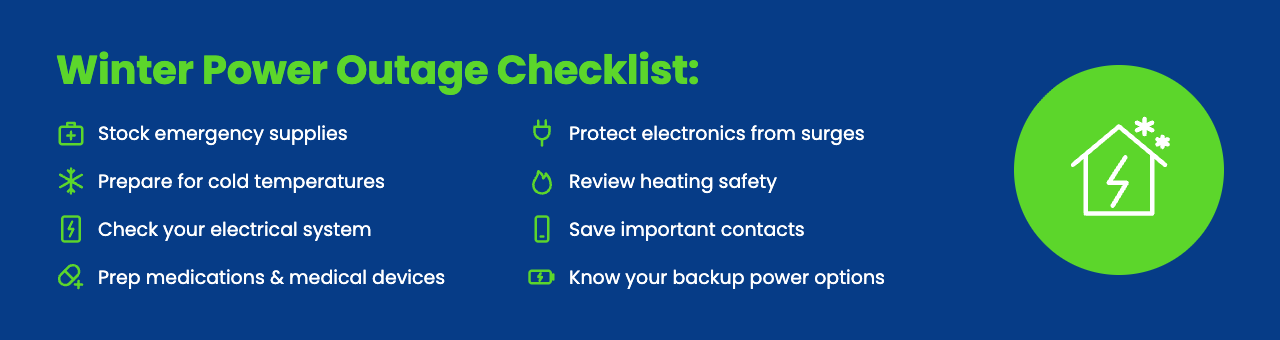
Winter Power Outage Checklist
The best time to prepare for an outage is before severe weather arrives. Check your supplies, identify potential electrical hazards, and plan how to keep everyone safe and warm.
- Stock emergency supplies: Gather water (at least one gallon per person, per day, for several days), nonperishable food, flashlights, extra batteries, a first-aid kit, a battery-powered or hand-crank radio, and portable phone chargers.
- Prepare for cold temperatures: Set aside warm clothing, blankets, and sleeping bags.
- Check your electrical system: Address frequently tripping breakers, damaged outlets, or other electrical warning signs before severe weather arrives.
- Prepare medications and medical equipment: Check prescription storage requirements and arrange backup power for essential medical devices. If someone in your home relies on powered medical equipment, ask your utility whether it offers a medical certificate or priority notification program.
- Protect electronics: Use properly rated surge protectors for sensitive electronics, and when practical, unplug nonessential devices during outages.
- Review heating safety: Check space heater instructions, keep heaters away from combustible materials, and test your smoke and carbon monoxide alarms.
- Save important contacts: Keep your utility’s outage reporting number and a qualified electrical contractor’s contact information accessible.
- Know your backup options: If you are considering a generator, discuss your home’s electrical loads, installation requirements, and budget with a qualified electrician.
5 Power Outage Safety Tips for Homeowners
These power outage safety tips can help protect your household from the most common winter outage hazards: fire, carbon monoxide, electrical surges, spoiled food, and downed lines.
1) Use Space Heaters Safely
Choose a heater designed for indoor use, plug it directly into a wall outlet, and keep it at least three feet from bedding, curtains, furniture, and other combustible materials. Turn it off whenever you leave the room or go to sleep. Avoid extension cords and power strips unless the manufacturer explicitly permits them.
2) Never Use Outdoor Equipment Indoors
Generators, camp stoves, charcoal grills, and gas-powered equipment can produce carbon monoxide, a deadly odorless gas. Operate generators outdoors at least 20 feet from doors, windows, and vents, and follow the manufacturer’s instructions. Never plug a generator into a wall outlet or connect it to your home’s wiring without a properly installed transfer switch, which can backfeed power into utility lines. Never use a gas oven or stovetop to heat your home. Install working carbon monoxide alarms on every level of the home and outside sleeping areas.
3) Protect Electronics from Surges
Power restoration can bring voltage fluctuations that damage sensitive equipment. Use properly rated surge-protective devices for computers, televisions, and networking equipment. If practical, unplug nonessential electronics during an outage, especially if lightning or electrical damage is a concern. Not every power strip is a surge protector, so look for a joule rating and a UL 1449 listing on the packaging.
4) Keep Food and Medication Safe
Keep refrigerator and freezer doors closed. A refrigerator generally keeps food cold for about four hours without power. A full freezer can maintain its temperature for about 48 hours, or 24 hours if half full, provided the door stays closed. Discard perishable refrigerated food that has been above 40°F for more than two hours. An appliance thermometer makes it easy to check. Follow medication storage instructions and ask a pharmacist about temperature-sensitive prescriptions.
5) Stay Away From Downed Power Lines
Winter wind and ice often bring down lines. Assume any downed or sagging line is energized. Stay well clear, keep children and pets away, and call 911 and your utility. Never touch a line or anything in contact with it, including tree branches, fences, and vehicles.
What to Do When the Power Goes Out: Is It a Utility Outage or an Electrical Problem?
When the power goes out, first figure out whether the problem is limited to your property or affects the whole area.
- Check whether nearby homes or streetlights have lost power too. Look at your utility’s outage map or report the outage through its official channels.
- If your neighbors also have no power, the problem may be with the utility grid. Report the outage and follow official restoration updates.
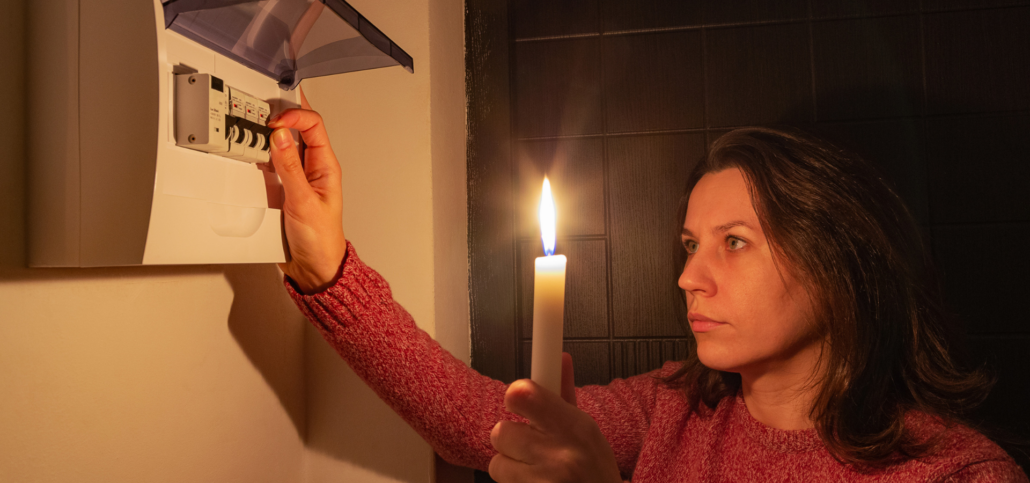
If only your property is affected, check your electrical panel for a tripped breaker if it is safe to do so. Never remove the panel cover or touch exposed wiring. If a breaker trips repeatedly, you notice a burning smell, hear unusual buzzing, or see sparks, stop investigating and contact a licensed electrician.
Get Your Home Ready Before the Next Outage with a Trusted Electrician
Don’t wait until a winter storm knocks out your power to discover a bigger electrical problem. Find a licensed electrical contractor with Powering Pacific Northwest (PPNW). A qualified electrician will assess your home’s electrical needs and plan improvements that help you prepare for a power outage this winter, done right the first time.
Take the first step now, before the next storm hits. Find a contractor today.
