
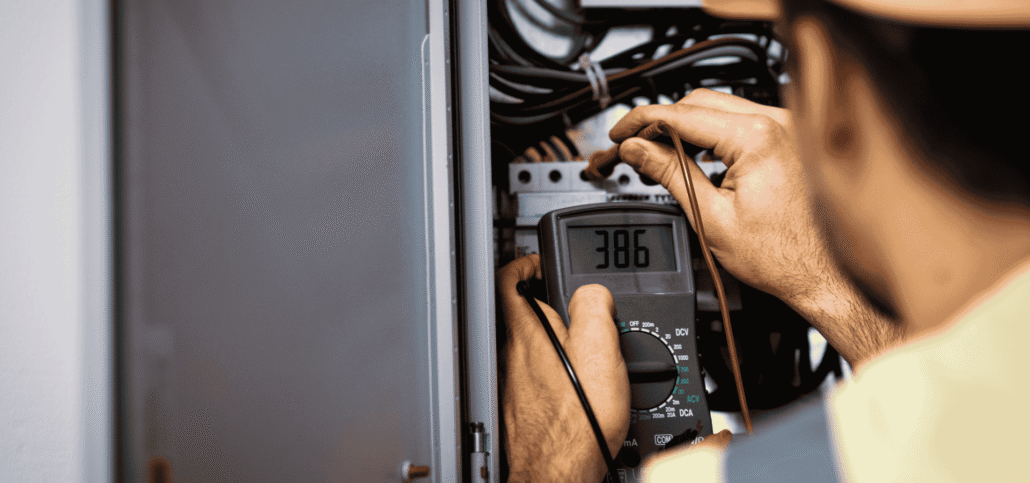
Preparing Your Commercial Building for Winter: An Electrical Systems Checklist
Winter storms can disrupt operations, limit access, and damage electrical equipment. For commercial building owners and facility managers across the Pacific Northwest, inspecting electrical systems before severe weather is the foundation of commercial building winter preparedness. It can help prevent downtime, protect tenants and employees, and reduce emergency repair costs.
A qualified electrical contractor can help you assess facility electrical readiness by identifying critical systems, verifying backup power, and establishing an emergency response plan.
Tips for Commercial Building Winter Preparedness
Commercial building winter preparedness starts with understanding which systems your property depends on, confirming that critical equipment is ready, and establishing a response plan with a qualified electrical contractor.
1) Plan Backup Power for Businesses
Backup power needs vary by property. An office building may prioritize emergency lighting, security, and communications, while a restaurant, warehouse, or multifamily property may depend on refrigeration, pumps, or other essential equipment. Identify which systems must operate during an outage and for how long.
- Generators can support selected circuits or larger electrical loads, depending on capacity and building configuration.
- Confirm fuel supply and delivery arrangements. Diesel and propane deliveries can be delayed during regional storms, so know how long on-site fuel will last at your expected loads.
- Uninterruptible power supplies (UPS) provide short-term power for sensitive electronics during a transition or controlled shutdown.
A qualified electrical contractor can assess loads, review transfer equipment, and identify capacity limitations. Standby generators should also be inspected and exercised under load on a regular schedule.
2) Verify Emergency Lighting Compliance
Emergency lighting and illuminated exit signs are essential life-safety equipment that help occupants navigate a building when normal power fails. Test these systems and their backup power sources to confirm they operate as intended.
- Check for burned-out lamps, damaged fixtures, failed batteries, and obstructed signs.
- Follow the required testing schedule. Under NFPA 101, battery-powered emergency lights are generally tested for at least 30 seconds monthly and 90 minutes annually.
- Keep maintenance records up to date and confirm the systems meet applicable building and fire codes. Requirements vary by occupancy, building configuration, and jurisdiction, so coordinate inspections and repairs with qualified professionals.
- Arrange prompt repairs for failed systems.
3) Protect Electrical Equipment From Cold and Moisture
Roof leaks, condensation, frozen pipes, and flooding can damage electrical equipment or create shock and fire hazards. Keep electrical rooms dry and free of stored materials. Check that doors and outdoor enclosures close properly, and that equipment is rated for its environment. If your building uses heat tracing or other freeze-protection circuits on pipes, test them before the first hard freeze. Avoid using temporary heaters or extension cords as substitutes for permanent electrical repairs.
If water reaches a panel or electrical equipment, keep people away and have a qualified professional assess the hazard before restoring power.
4) Establish an Emergency Electrical Response and Maintenance Plan
Confirm your electrical contractor’s emergency service availability, after-hours contact process, expected response times, and procedures for prioritizing urgent repairs. Clarify which issues qualify as emergencies, how technicians access the property, and who can authorize work. Keep in mind that response times can vary with storm severity, technician availability, and the nature of the failure.
The best way to avoid a winter emergency is to catch problems early. Keep your electrical systems running reliably and identify potential issues with routine maintenance.
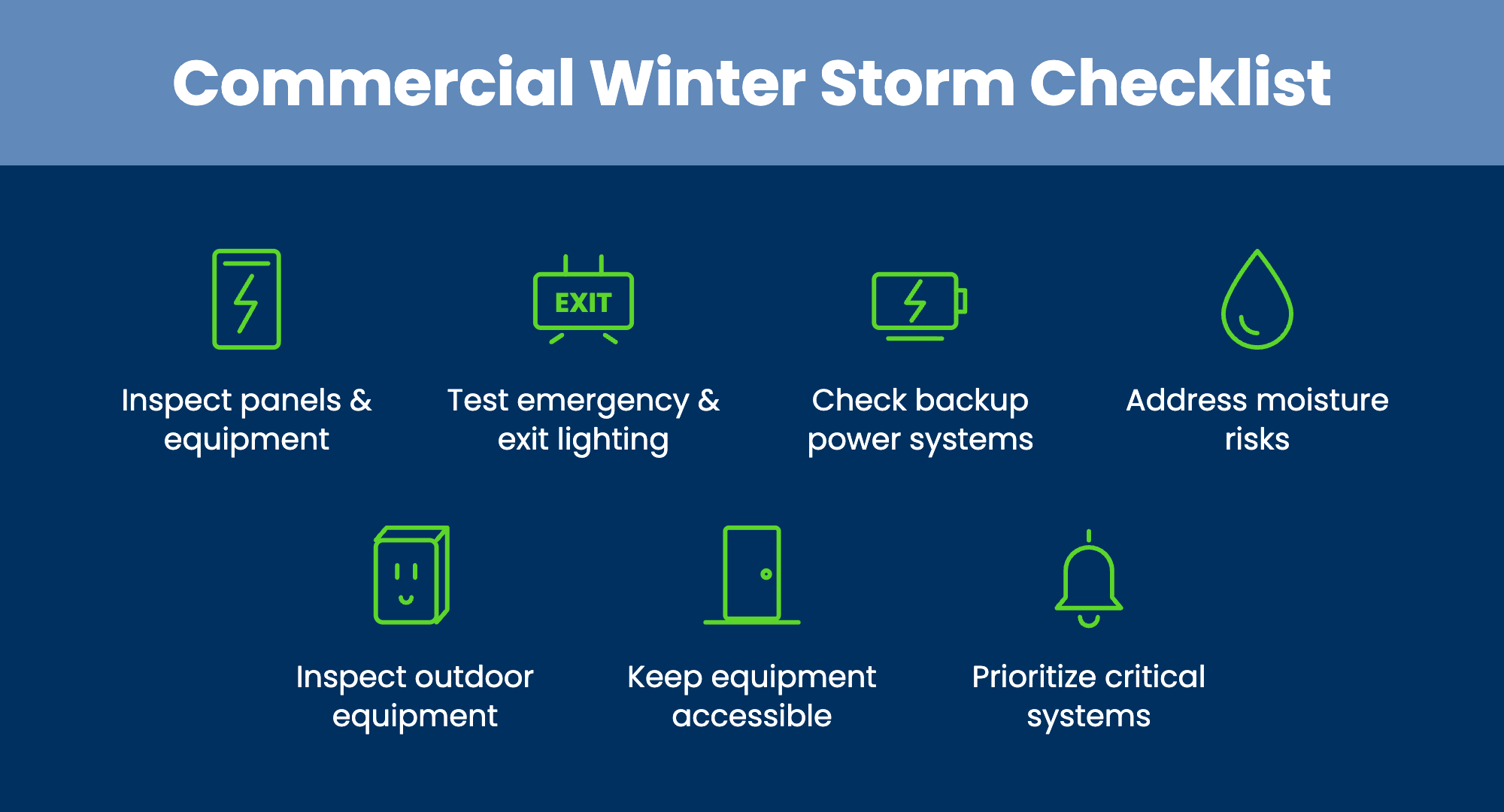
Commercial Winter Storm Checklist: Quick Overview
Review these areas to identify maintenance needs and potential hazards.
- Inspect electrical panels and equipment: Look for corrosion, water intrusion, physical damage, or unusual heat. Keep electrical rooms dry, clear, and accessible.
- Test emergency and exit lighting: Check fixtures, illuminated exit signs, and backup batteries according to manufacturer instructions and applicable code requirements.
- Check backup power systems: Confirm generators, transfer switches, and uninterruptible power supplies (UPS) are maintained and ready for their intended loads.
- Address moisture risks: Inspect roof penetrations, plumbing, and drainage near electrical rooms and equipment.
- Inspect outdoor electrical equipment: Check exterior lighting, weatherproof enclosures, and exposed connections for damage or moisture.
- Keep equipment accessible: Keep paths to electrical rooms, generators, and fuel fill points clear of snow, ice, and stored materials so technicians can reach them quickly.
- Prioritize critical systems: Identify equipment that must remain operational, including fire alarms, access controls, communications, refrigeration, and essential building systems.
Document deficiencies and schedule necessary repairs before severe weather complicates access or service.
Connect with Professional Commercial Electrical Contractors in Oregon and SW Washington
Addressing electrical maintenance, backup power, and life-safety systems before a storm can help protect occupants and limit business interruptions. Get your building ready for winter with Oregon and Washington’s most reliable commercial electricians. Search the Powering Pacific Northwest directory to find a licensed commercial electrical contractor near you.
