
What Is Knob-and-Tube Wiring? An Identification & Safety Guide
Older Oregon and Southwest Washington homes commonly have knob-and-tube wiring, which was most popular in the early to mid 1900s. Originally designed as an open-air system, it is now frequently considered a fire risk. If you suspect you may have knob-and-tube wiring, this blog post is for you. We’ll explain why knob-and-tube wiring is dangerous, what it looks like, and what to do if you have it in your home. Let’s explore this type of home wiring and what it means for Pacific Northwest homeowners.
What Is Knob-and-Tube Wiring?
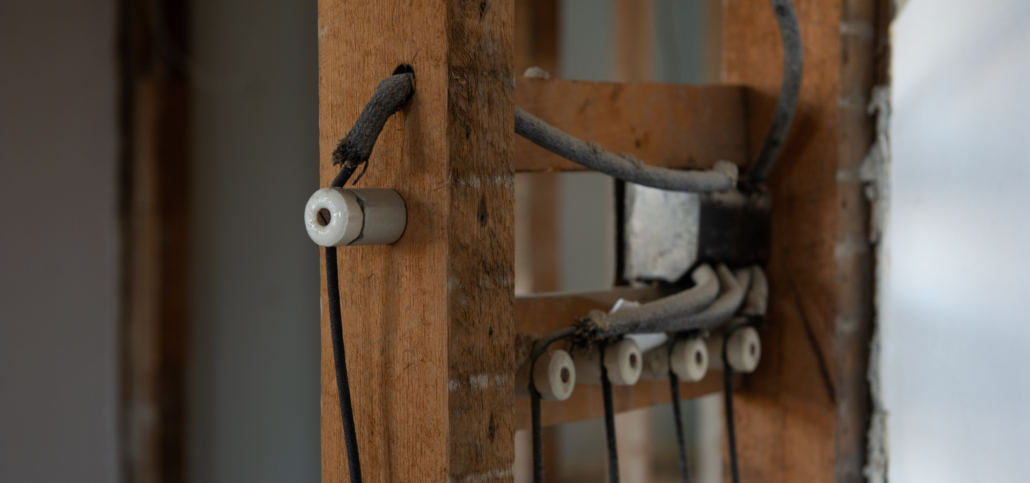
Knob-and-tube wiring is an early method of powering homes that uses copper wires, knobs, and tubes. Ceramic knobs support single copper wires along wooden framing as they pass through holes lined with porcelain tubes. This type of wiring only uses hot and neutral wires and lacks a safety ground wire for three-prong plugs. It differs from modern home wiring because, unlike bundled cables, the hot and neutral wires run separately through the home.
When Was Knob-and-Tube Wiring Used?
Knob-and-tube wiring was commonly used in the United States from the 1880s to the 1940s, and declined during the 1950s and beyond. It followed the invention of the electric light bulb in 1879 by Thomas Edison. It quickly gained popularity and became the primary method for wiring homes from the early 1900s to about 1925. In the 1930s and 1940s, its use declined significantly as safer, more affordable rubber-coated cables and aluminum wiring became the norm.
What Does Knob-and-Tube Wiring Look Like?
Unsure if you have knob-and-tube wiring at home? The system consists of single, cloth-wrapped wires that run through wood framing with white ceramic tubes and small, white porcelain knobs. The porcelain knobs are nailed directly into wooden floor joists, studs, or rafters.
Copper electrical wires pass through the ceramic cylinders or tubes, protecting the insulation from rubbing against the wood’s edges. One hot and one neutral copper conductor run parallel to each other and are often wrapped in a rubber or asphalt-saturated cloth jacket. There is no third ground wire in knob-and-tube systems.
You can typically find knob-and-tube wiring in homes built between the 1880s and 1940s in open basements, crawlspaces, and attics.
Is Knob-and-Tube Wiring Dangerous?
Today, knob-and-tube wiring is widely considered a fire hazard due to old age, lack of grounding, and modern electrical overloads. It is not inherently dangerous, but there are several risks of aging knob-and-tube wiring, including no ground wire, insulation fire hazards, and aging materials.
-
No ground wire: Since knob-and-tube wiring doesn’t have a ground wire, three-prong appliances cannot be safely grounded. A lack of grounding increases the risk of electric shock or shorts.
-
Insulation fire hazards: When knob-and-tube wiring is covered by modern insulation, wires can easily overheat and start a fire. The system was originally designed to run with proper ventilation to release heat safely.
-
Aging materials: Many of these systems are 70 to over 100 years old, which means rubber or cloth insulation has often become brittle or cracked and can leave live wires exposed.
Also, many insurance companies may charge higher premiums or deny coverage for homes with knob-and-tube wiring, or require replacement before issuing coverage.
What to Do If You Have Knob-and-Tube Wiring
If you have knob-and-tube wiring at home, it’s best to bring in a professional electrician to evaluate and replace the system. Replacement is the safest and recommended course of action for homeowners because it is not typically safe for modern electrical loads.
Knob-and-Tube Wiring and Home Insurance
Call a licensed electrician to evaluate whether the wiring is still active and make plans for replacement. An electrician can provide a cost estimate for a full or phased replacement. They will remove the outdated wiring, pull insulated non-metallic cables through your home, and install grounded outlets to meet current electrical codes.
Find a Residential Electrician in the Pacific Northwest
If you live in Southwest Washington or Oregon and your home needs rewiring, Powering Pacific Northwest (PPNW) can connect you with a skilled residential electrician. Our network of local electrical contractors has experience handling legacy knob-and-tube systems and rewiring homes to meet modern electrical codes.
Find a contractor today.

