
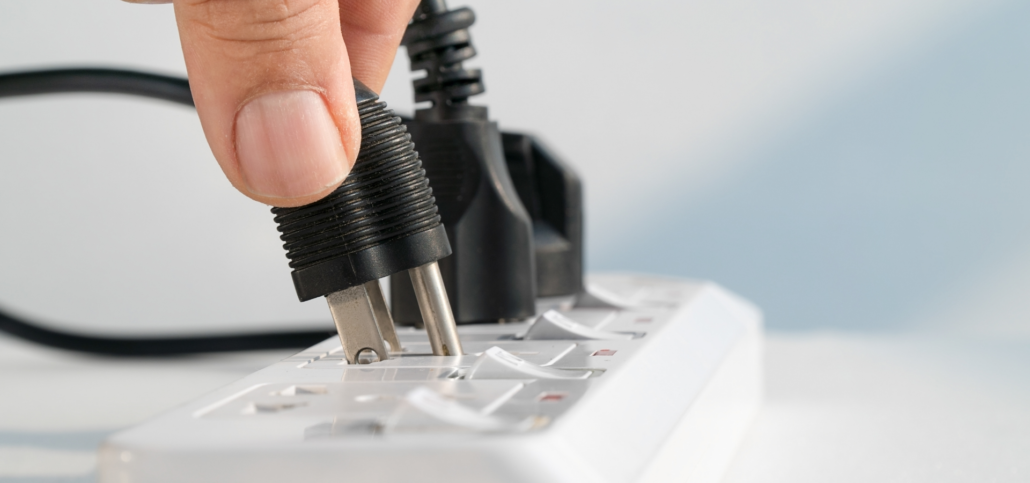
How Many Devices Can Go Safely Into One Outlet?
How many things can you really plug into one outlet?
It’s easy to take our outlets for granted. Between phone chargers, laptops, TVs, appliances, and all the other devices we use every day, a single outlet can quickly become the center of a lot of activity.
But how much is too much? Understanding how to use outlets, power strips, and extension cords safely can help prevent problems before they happen.
In this article, we’ll look at how to use power strips and extension cords safely, the signs that a circuit may be overloaded, and when it’s time to call an electrician.
Electrical Outlet Safety: Amps vs. Outlet Count
Outlet safety isn’t about how many plugs you can get into a socket; it’s about amperage. Most homes run on 15-amp or 20-amp circuits. Each circuit generally powers more than one outlet in a room. So you have to consider how much you have plugged in throughout a room, not just on a single outlet.
It’s a good idea to keep the 80% rule. This rule states that you shouldn’t draw more than 80% of a circuit’s rated capacity at once. For a standard 15-amp circuit, that’s about 1,440 watts. Practically, you can plug in a laptop, phone charger, and desk lamp into an outlet, but adding a space heater might tip the scales.
Extension Cord Safety: Surge Protector vs. Power Strip
A power strip simply adds outlets and acts as an extension of the wall. A surge protector does the same thing, but it adds a layer of defense by sensing voltage spikes from lightning, storms, or appliances cycling on and off. Surge protectors divert the excess electricity before it can damage your electronics.
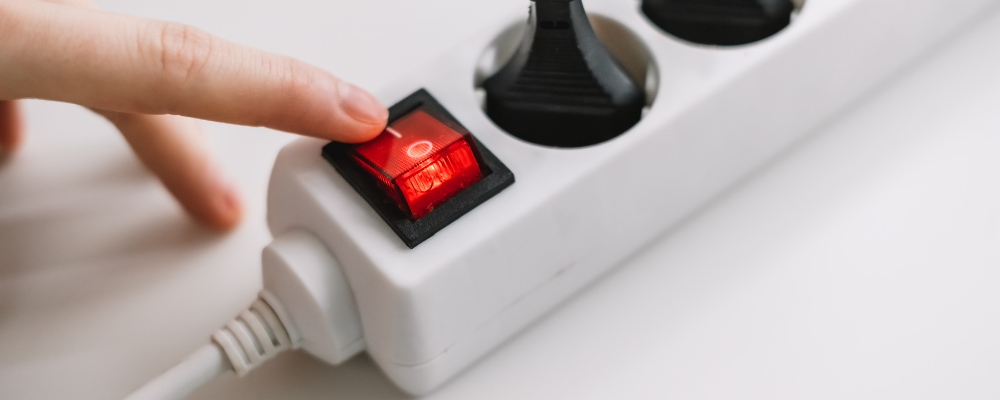
Note that extension cords and power strips do not increase the amperage of your circuit. Just because a power strip has six spots for plugs doesn’t mean your circuit can handle six devices at once. Around 3,300 home fires occur from extension cord use each year. That’s why it’s so important to understand how to use them properly.
Power Strip Safety Tips
Here are a few safety tips for using power strips at home.
- Never plug one power strip into another: Daisy-chaining power strips is a very dangerous practice and can quickly overload circuits and cause fires.
- Use UL-listed power strips: UL-listed means the nationally recognized UL Solutions has tested the power strip and it meets high safety standards.
- Only plug high-wattage appliances into the wall outlet: Devices such as space heaters, mini fridges, and window AC units should never be plugged into a power strip.
- Don’t run power strips under rugs: Heat needs room to dissipate, so doing so can create a fire hazard.
Warning Signs of an Overloaded Outlet
It’s best to know the warning signs of an overloaded outlet to prevent fire hazards at home. Here are red flags that your outlet is under strain.
- Warm or discolored outlet or plug: When outlets or plugs are warm or discolored, it means they are working harder than they should.
- Buzzing or crackling sounds: Strange sounds coming from outlets indicate electrical arcing or that a loose wire is generating intense heat.
- Frequently tripped breakers: If you notice frequent circuit breaker trips when certain devices are run together, you can infer that your outlet is overloaded.
- Flickering or dimming lights: If you notice your lights flicker or dim when a certain device kicks on, it indicates overload.
- Burning smells: A burning smell near an outlet is urgent and signals a serious fire hazard. Unplug everything connected to the outlet and call a licensed electrician.
When to Call a Licensed Electrician
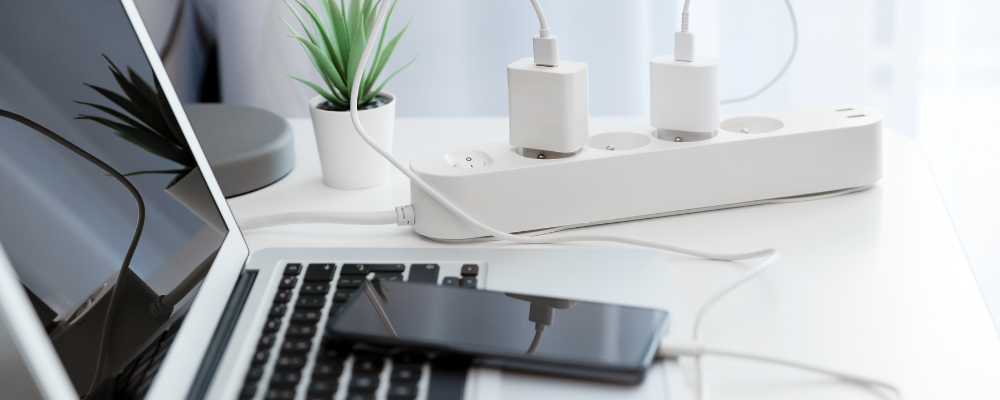
If you rely on power strips and extension cords to power all of your family’s devices, it means you may have a capacity problem. If you feel like certain rooms don’t have enough outlets, you may need more outlets installed or even a dedicated circuit.
A licensed electrician will evaluate your home’s electrical capacity and add outlets where you need them. This is a much safer and permanent fix than adding another power strip.
For Electrical Outlet Safety, Contact PPNW Electricians
Powering Pacific Northwest (PPNW) connects homeowners to a network of licensed residential electricians in Oregon and Southwest Washington. If you need more outlets installed or are curious about your home’s electrical capacity, we can help. Our professionals are fully licensed, bonded, and insured for peace of mind. You can trust that they’ll get the job done right.

