
Smart Home Electrical Installation: DIY vs. Electrician Tasks
Smart home upgrades are more accessible than ever, but accessible doesn’t always mean safe. DIY smart home upgrades can be appealing to homeowners looking for cost savings and convenience. However, smart home electrical installation often isn’t a DIY job. Many smart home devices aren’t suitable for DIYers and require professional installation.
We’re going to cover which smart home upgrades are safe to DIY and which require a licensed professional. Knowing where the line is between DIY and a licensed pro protects your home, warranty, and family.
DIY-Safe Smart Home Upgrades
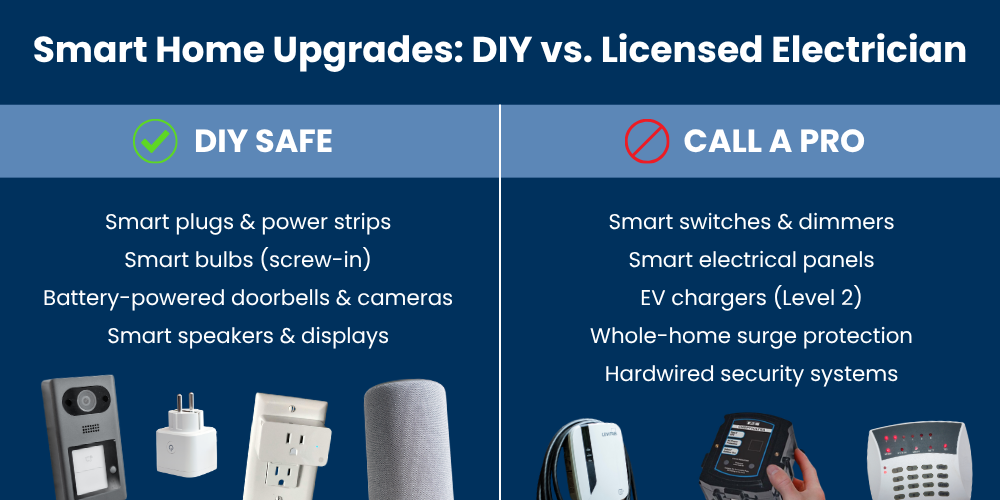
In general, the safe zone for homeowners and smart home upgrades lies between low-voltage and plug-in devices. If a smart home device plugs in or screws in, you’re typically fine to do it yourself.
Some examples of smart home upgrades you can do yourself include:
- Smart plugs & power strips
- Smart bulbs and LED fixtures (screw-in)
- Smart speakers, displays, doorbells (battery-powered)
Additionally, some smart thermostats may be suitable for DIY installation, but wiring varies.
Sticking to low-voltage plug-in or screw-in devices helps protect you from harm and prevents costly mistakes that could damage your home. When in doubt, call a professional.
When a Licensed Electrician is Required
Many smart home upgrades are hardwired and require the expertise of a licensed electrician. Features such as smart doorbells and video cameras may require hardwiring, which isn’t safe for homeowners to do on their own.
Smart switches and dimmers also require touching existing wiring, so working with a professional is recommended.
Other smart home upgrades that need professional installation include:
- Smart electrical panels: Installation requires securing permits and managing complex loads. This installation should be handled by a licensed professional only.
- EV chargers: Level 2 (240V) EV charging stations must be installed by a professional electrician. They require a dedicated circuit, code compliance, and utility coordination. These installations also sometimes require an electrical panel upgrade to handle increased load.
- Whole-home automation wiring: Low-voltage structured wiring must be installed, along with new circuits and in-wall runs for whole-home automation.
- Whole-home surge protection: Whole-home surge protection is installed at the electrical panel and requires specialized training and expertise.
- Security system integration with hardwired sensors: This process involves wall fishing, conduit installation, and panel tie-ins.
Why Hiring a Licensed Electrician Matters
Beyond the installation, hiring a licensed electrician provides several benefits. Working with a skilled electrician provides peace of mind to homeowners. Professional electricians are licensed and insured, meaning you can trust their work.
Additional reasons to work with a professional include:
- Code compliance: Code compliance is extremely important to keep your homeowner’s insurance valid.
- Smart device warranties: DIY installation and improper wiring often void smart device warranties.
- Permit acquisition: A licensed electrician will pull the necessary permits to make sure the work is inspected and reported.
- Liability protection: If something goes wrong during a DIY installation, your homeowner’s policy may deny the claim.
- Proper load calculation: A professional ensures that your electrical panel can handle new devices without tripping breakers or causing safety hazards.
Work with Powering Pacific Northwest for Smart Home Wiring
If you’re looking for a smart home electrician, you’ve come to the right place. Powering Pacific Northwest (PPNW) connects homeowners with licensed residential electricians in Oregon and Washington. Our electrical professionals are fully licensed, bonded, insured, and safety-minded.
Whether you need an EV charger installed or want whole-home surge protection, our residential electrical pros can handle the job.
Find a contractor today to help with your smart home installations.

