
What Size Generator Do I Need? A Whole-Home Generator Guide
When the power goes out, will your home stay warm, your food stay cold, and your essential systems keep running? Pacific Northwest storms can leave homeowners without power for hours or days. For rural properties and vacation rentals, outages can also disrupt water systems, guest stays, and security.
Choosing the right generator helps protect your property. A qualified union electrician can assess your electrical system, calculate your power needs, and safely install your generator. Here’s how to answer the question “What size generator do I need?” before you invest in backup power.
How Does a Generator Work? Portable vs. Standby Options
Home generators supply electricity during utility outages. The two main options are portable generators and permanently installed standby generators.
Portable generators typically cost less and can power selected appliances or essential circuits. They require manual setup and must operate outdoors, at least 20 feet away from windows, doors, and vents.
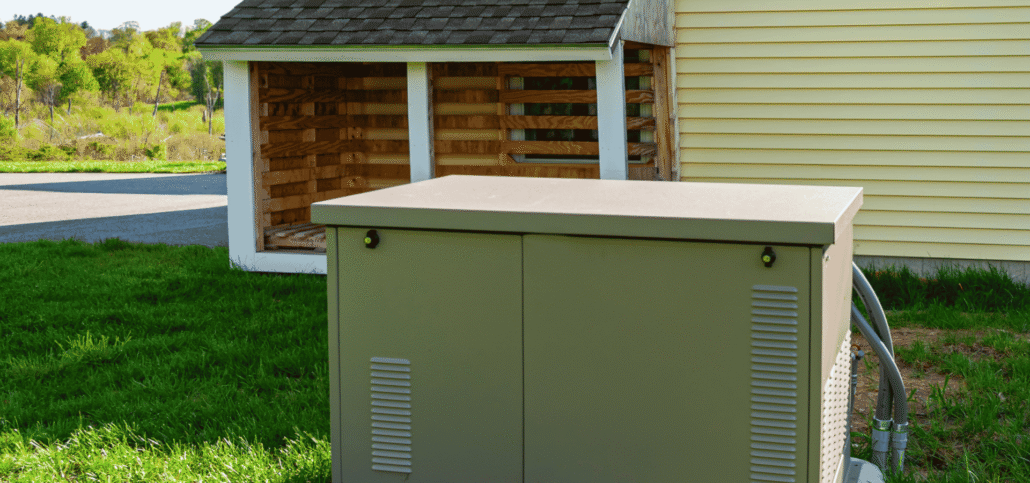
Whole-home standby generators are permanently installed outside and typically run on natural gas or propane. An automatic transfer switch detects an outage and transfers selected electrical loads to the generator. When utility power returns, the system switches back to the utility.
How to Connect a Generator to Your House
A portable generator should connect to your home through a manual transfer switch or an approved interlock kit with a power inlet box, installed by a licensed electrician. This setup lets you safely power selected circuits from your panel without backfeeding the utility grid. Standby generators connect through an automatic transfer switch. Never connect a generator by plugging it into a wall outlet or dryer receptacle.
Do You Need an Electrician to Install a Whole-Home Generator?
Yes. A licensed electrician should handle the electrical connections and transfer equipment. Improper connections can cause dangerous backfeeding, sending electricity into utility lines and endangering utility workers.
A qualified union electrician can evaluate your electrical panel, calculate your power needs, and identify necessary upgrades before installation. Proper installation also includes appropriate permits, inspections, and testing.
What Size Generator Do You Need to Run a House?
Generator capacity is measured in kilowatts (kW). The right size depends on which appliances and systems you need to run at the same time, not just your home’s square footage.
Depending on capacity, a generator may power:
- Heating and cooling systems
- Refrigerators and freezers
- Lights and selected outlets
- Internet and security equipment
- Sump pumps and well pumps
- Medical equipment
You can choose a generator for essential circuits or a larger system designed to support most household needs. Load-management equipment can help prevent demand from exceeding available capacity.
What Are Running Watts vs. Starting Watts?
Running watts measure the electricity an appliance needs to operate continuously. Starting watts measure the extra power some equipment needs to start.
Refrigerators, pumps, and HVAC systems may require substantially more power at startup. Your generator must handle these demands along with the running load of other equipment.
How Big of a Generator Do I Need?
A home that runs a refrigerator, furnace fan, lights, and a few outlets will have different requirements than one running a heat pump, electric range, and water heater. Start by identifying what you need during an outage.
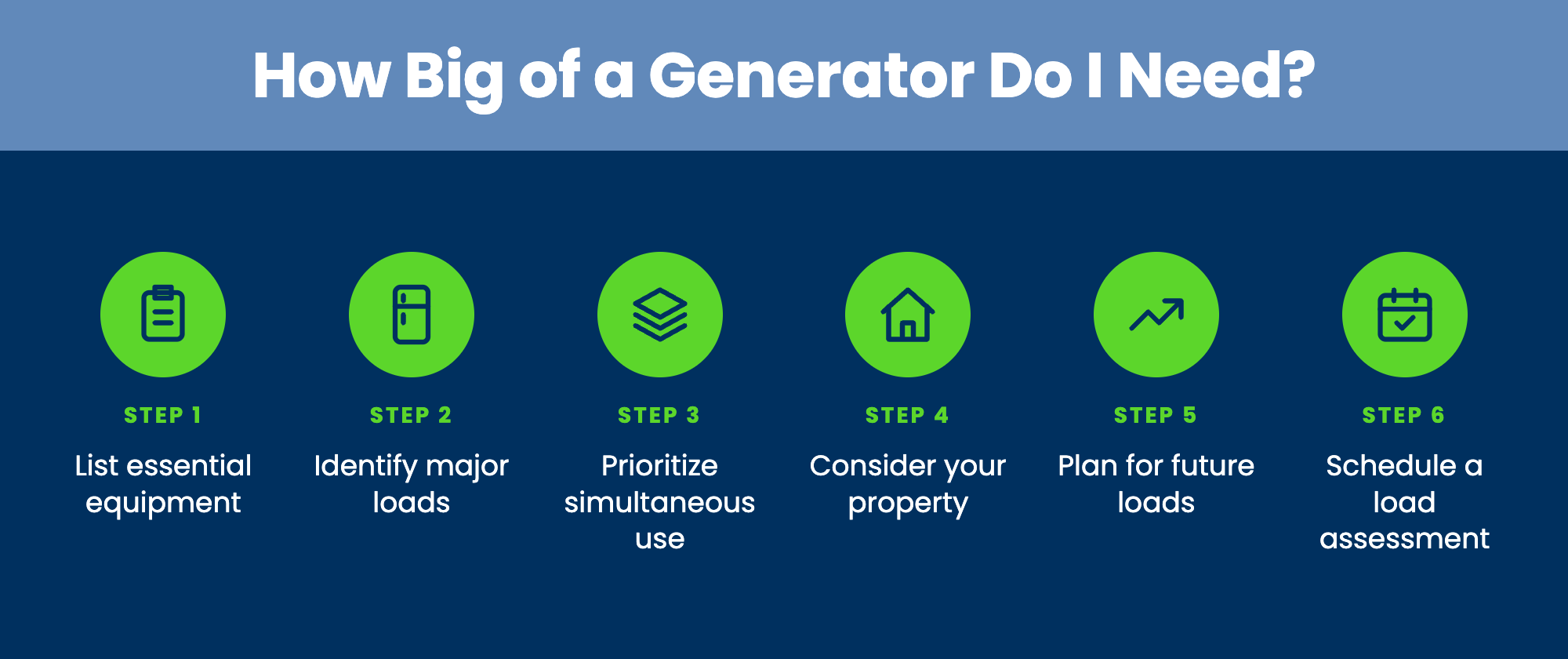
- List essential equipment: Include heating, refrigeration, lighting, water pumps, and medical devices.
- Identify major loads: Note heat pumps, air conditioning, electric ranges, and water heaters.
- Prioritize simultaneous use: Decide which appliances must run together and which can wait.
- Consider your property: Rural homes with well pumps and vacation rentals with multiple HVAC systems may need more capacity.
- Plan for future loads: If you’re adding an EV charger, heat pump, or hot tub, factor it in now so you don’t outgrow your generator.
- Schedule a load assessment: An electrician can calculate demand, check panel capacity, and recommend an appropriately sized generator.
How Much Does a Whole-House Generator Cost?
Final costs depend on capacity, fuel supply, installation complexity, and local requirements. Key expenses include:
- Generator and transfer switch: Equipment must match your electrical system and power needs.
- Fuel supply: Natural gas line extensions or propane tank installation can add costs.
- Electrical upgrades: An outdated or undersized panel may need replacement.
- Installation and permits: Site preparation, wiring, inspections, and labor affect the total.
- Maintenance and fuel: Budget for annual service and fuel for extended outages.
Request an itemized estimate covering equipment, electrical work, fuel connections, permits, and recommended upgrades.
Get the Right Generator With a Licensed, Local Residential Electrician
Ready to prepare your home for the next outage? Partner with Powering Pacific Northwest (PPNW) to find a licensed union electrical contractor who can assess your home’s power needs, recommend the right generator size, and provide an installation estimate.
Get started today with Oregon and Washington’s best residential electricians to plan a safe, reliable backup power system for your home or rental property.
Find a contractor today.
